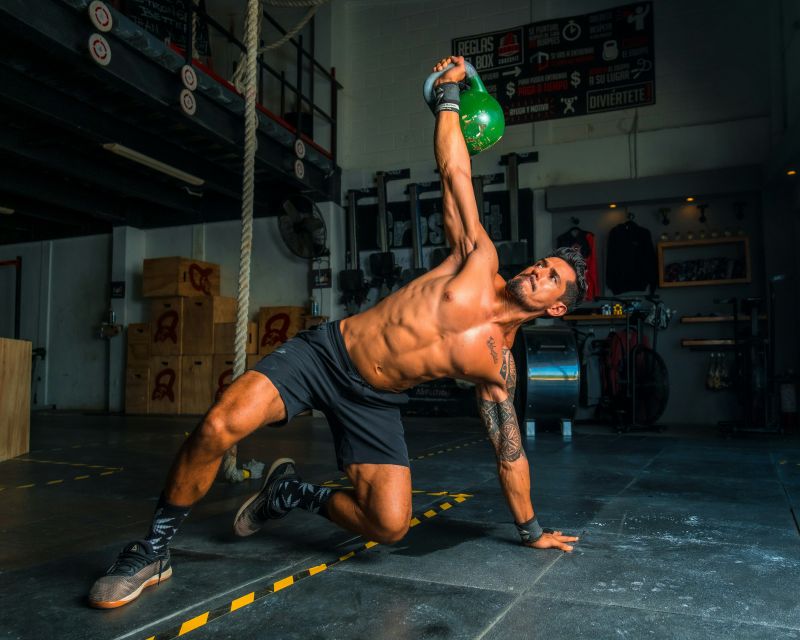
 This is why you are failing at fitness. 1. You are expecting to look like this person in the photo. This is the standard set by social media (I could have used a picture of a ripped woman and this is not wrong if you want to look that way but this is not necessary to succeed). 2. You think you need to train hard 5-6 times per week for at least 60 minutes at a time. This is rigid-based thinking. 3. You think you need to do fasted cardio and eat meals out of Tupperware 5 times per day. 4. You put the training before your life and believe there will be no obstacles to get in your way. 5. You think fitness has to be the most important thing in your life because of what Johnny Biceps says on social media. This is fine if you are younger, have no kids, and don't have many of life's stressors yet. But when you're working long hours, you're hitting middle age and above or you have 1-3 kids, life is a lot different. Here's a better approach. 1. Train 2-3 good quality sessions per week and only do more if you have the time and energy. 2. Be more flexible with your training sessions. Everything counts. If you can only do 10 minutes, do 10 minutes. 3. Use lifestyle-friendly food. There's no need to be eating chicken and broccolli every day. 4. Realise that self-care is important but your fitness should not come before the person. You have a life outside of fitness. 5. Realise that the gym is not the only training solution. As Professor James Stubbs states - "We live in a world where we have a cornucopia of choices". Use walking, yoga, boxing, climbing, cycling or whatever it is you enjoy. You do not have to throw the kitchen sink at your fitness to get results. You are trying to achieve results using methods that don't fit your current lifestyle. This kills motivation quickly. Look at your life and figure out how to incorporate fitness and nutrition into that. Be more flexible, less rigid, or as my old mate Bruce Lee said - "Be like water my friend". Here Are Four Ways I Can Help You Get Fit And Lose Weight And Actually Keep it Off.
1. Here is my youtube channel which has over 100 videos including 55 workouts and other educational videos. 2. I now offer ONLINE 1-1 Personal Coaching. Train with me from anywhere in the world at any time. I now offer fully bespoke 1-1 weight loss coaching via my TRUECOACH online platform. Check it out here 3. Check out my small group coaching sessions (max 4 people) Small Group Coaching. 4. 1-1 Personal Training at my Studio in North Sydney. My top level service. In-depth personalised training programs, nutrition coaching and weekly sessions at my boutique studio in North Sydney. Check out my Personal Training Options here:
0 Comments
 Scroll any fitness feed on social and they’ll tell you that in order to lose fat you have to: - Track calories or macros - Strength train 2-4 times per week - sleep 7-9 hours per night - Do cardio 1-2 times per week - Walk 10,000 steps per day - Eat protein with every meal. - Eat slowly - Drink 8 glasses of water per day - Take 12 cold showers before 5:00 am 😜 All this advice is great but it will take years for many of you to get here. It’s too overwhelming. You’ll feel like doing maths homework and who likes that? You’ll give up because it’s too much load on top of your normal busy day. The key is to take ONE THING from this list or find the ONE THING that’s preventing you from losing that first kg and master that. Practise that. Get good at it or reduce it if it’s a bad habit. Then when it becomes consistent and a normal part of your day - add the next thing. Any of my clients who’ve lost more than 10kgs and kept it off have hardly had to track anything or follow complicated plans. Quite often we’ve just changed 1-2 things and that has catapulted their results. That one thing is different for each person but I can promise you this, it makes weight loss simpler, easier, and much more sustainable. THE ONE THING ONLY approach is something I’ve been refining over the years with my coaching. If you’re keen to lose that next kg, message me “kg” or comment below and I’ll be in touch to have a chat. Here Are Four Ways I Can Help You Get Fit And Lose Weight And Actually Keep it Off.
1. Here is my youtube channel which has over 100 videos including 55 workouts and other educational videos. 2. I now offer ONLINE 1-1 Personal Coaching. Train with me from anywhere in the world at any time. I now offer fully bespoke 1-1 personal training via my TRUECOACH online platform. Check it out here 3. Check out my small group coaching sessions (max 4 people) Small Group Coaching. 4. 1-1 Personal Training at my Studio in North Sydney. My top level service. In-depth personalised training programs, nutrition coaching and weekly sessions at my boutique studio in North Sydney. Check out my Personal Training Options here: 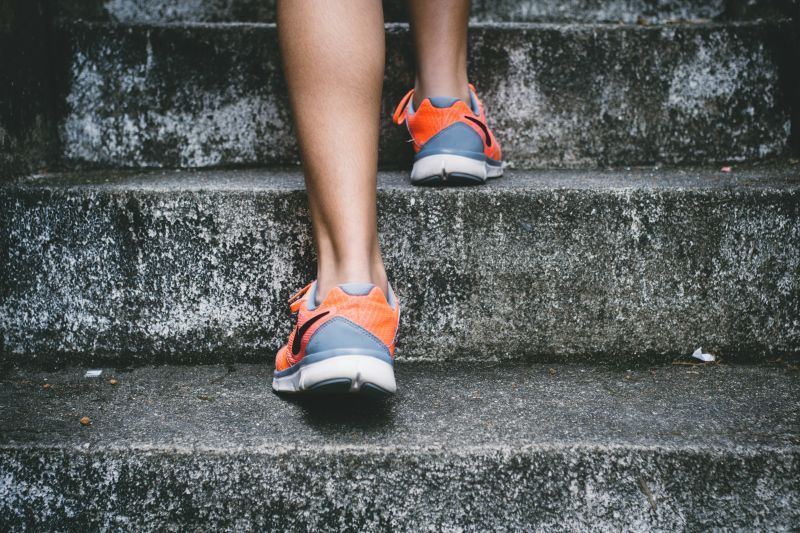 A lot of you will use an "exercise-only approach" for fat loss. I believe this is a losing strategy. Here's why. It's really hard to burn a lot of calories with exercise and do it consistently. Most people eat the calories back either consciously or unconsciously. It's far easier to cut a few hundred calories by making smaller, sustainable dietary changes than it is to burn the same amount of calories with exercise. By all means, keep exercising, but do it for improved health, performance, and the many other benefits it provides, not as a punishment to burn off the extra food you ate. Exercising only for fat loss can become demotivating quickly. You'll lose the love of the exercise itself because it's all about the calories burned. Train for fitness and performance, eat for fat loss. Here Are Four Ways I Can Help You Get Fit And Lose Weight And Actually Keep it Off.
1. Here is my youtube channel which has over 100 videos including 55 workouts and other educational videos. 2. I now offer ONLINE 1-1 Personal Coaching. Train with me from anywhere in the world at any time. I now offer fully bespoke 1-1 personal training via my TRUECOACH online platform. Check it out here 3. Check out my small group coaching sessions (max 4 people) Small Group Coaching. 4. 1-1 Personal Training at my Studio in North Sydney. My top level service. In-depth personalised training programs, nutrition coaching and weekly sessions at my boutique studio in North Sydney. Check out my Personal Training Options here:  My top 10 rules for health and fitness. 1. Plan your day ahead. 2. Try to exercise daily in a way that you enjoy. 3. Lift weights progressively each week. 4. Never underestimate the power of a good sleep routine. 5. Drink non-caloric drinks. 6. Eat food - not too much - mostly plants (Michael Pollan). 7. Embrace simplicity - complexity kills. 8. Avoid detoxes, fads, aggressive quick fixes. They're mostly nonsense. 9. Stay flexible and mobile as you age (something I need to work more on). 10. Be patient. Results always come. Stay the course. Think of your future self. What would you add? Here Are Four Ways I Can Help You Get Fit And Lose Weight And Actually Keep it Off.
1. Here is my youtube channel which has over 100 videos including 55 workouts and other educational videos. 2. I now offer ONLINE 1-1 Personal Coaching. Train with me from anywhere in the world at any time. I now offer fully bespoke 1-1 personal training via my TRUECOACH online platform. Check it out here 3. Check out my small group coaching sessions (max 4 people) Small Group Coaching. 4. 1-1 Personal Training at my Studio in North Sydney. My top level service. In-depth personalised training programs, nutrition coaching and weekly sessions at my boutique studio in North Sydney. Check out my Personal Training Options here: 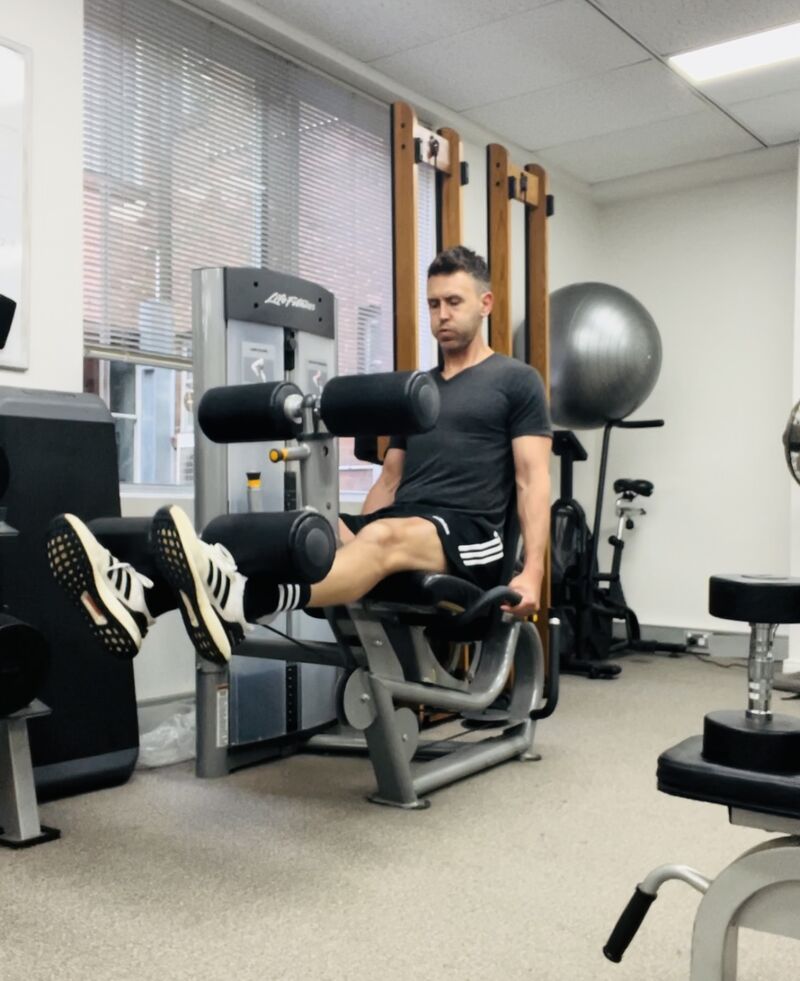 How do I know how much weight to lift at the gym?
Choosing the right weight to use during your weights session can be tricky, especially with new programs or if you're new to training. A good basic rule of thumb is to pick a weight that allows you to perform the desired number of repetitions within the Repetition range you've been prescribed. For example: A. Bench press x 6-8 reps: 4 Sets. You would pick a weight that allows you to perform 6, 7, or 8 repetitions. If you only get 5 reps, it's too heavy, if you get 9, it's too light for that particular exercise. A good way to determine your starting weight is to begin with a light weight and gradually increase it until you feel the right level of challenge. Most importantly - write down the weight you lifted and how many repetitions you did. You now have a benchmark from which to work. This motivates you for the next workout as you can do more reps with the same weight or move up a weight and try the same reps. Both of these approaches result in increased strength and fitness so don't stress over which one is perfect. You don't want to be spinning your wheels by lifting the same weights every week. Weight training is a mixture of art and science. As you get more experienced you'll get better at picking the weights to achieve your goal. Any questions? What lessons can doom scrolling and binge watching teach you about fitness and weight loss?1/28/2024  What do binge-watching TV, doom-scrolling social media, and overeating have in common?
They're all easy to do often, without much thought and they provide immediate rewards to our brains. What do new fitness and eating plans have in common with most busy people? They're all complicated, hard to follow, require a lot of thought and planning, and don't provide immediate rewards to our brains. Habits are behaviours that are done often and become automatic. If we make nutrition and exercise complicated, we won't do them often and they won't become habits in our lives. Take the lessons from social media doom-scrolling, binge-watching, and overeating and apply them to your exercise and food if you want to make healthy changes. Here are some tips. 1. Keep exercise simple, short, and easy to do when you first start. Most people train too hard when they start and either get injured or so stiff that cannot move for 3 days after training. That's not ideal for making a regular habit. 2. Change one food habit at a time. Master it and then stack another habit on top. I've had clients lose up to 12kgs with just one food habit alone. 3. Plan your nutrition with foods you enjoy. This will help with FOMO, restriction, and boring diets. 4. Go for frequency over intensity with exercise. Intensity is great and we must challenge ourselves but our main aim with exercise is to be able to accumulate workout after workout after workout over long periods. 5. Try not to miss two workouts in a row or have two bad meals in a row. This has been popularised by James Clear in the book 'Atomic Habits'. It's okay to miss a workout or do an alternative workout to the one planned. The best thing to do when missing a session is to not miss the next session. It's okay to have a biscuit at 10:00 am without ruining your entire day of nutrition. By following these tips you'll end up with all your results in the long run. Make exercise and food feel good. Keep it simple  Do you ever find yourself caught in the common trap of believing that transforming your diet requires monumental changes? It's a misconception many of us fall into, thinking that success hinges on radical alterations like strictly adhering to protein and veggies or eliminating carbs, sweets, and alcohol altogether. However, this 'all or nothing' mindset can quickly demotivate you when you can't stick to your plan. The truth is, you're likely overlooking the numerous small wins you achieve every week without even realizing it. These small wins are not just insignificant moments; they play a pivotal role in the psychology of behaviour change. When you acknowledge and celebrate these victories, you reinforce positive habits, boost your motivation, and build the momentum needed for long-term success. Here are some common examples you may have missed this week. 1. You had takeaway 3 times this week instead of 6 - that's a win. 2. You had one glass of wine per night instead of 2 or 3 - that's a win. 3. You had a small bar of chocolate instead of the family block of Dairy Milk (hmmmm love Dairy Milk) - that's a huge win. Progress doesn't happen overnight, and that's okay. Don't compare yourself to the 'perfect' diets you see online. You're already doing better than you think. Keep celebrating those small wins on your path to your goals. You're making progress every week even if you aren't 'perfect'. Here Are Four Ways I Can Help You Get Fit And Lose Weight And Actually Keep it Off.
1. Here is my youtube channel which has over 100 videos including 55 workouts and other educational videos. 2. I now offer ONLINE 1-1 Personal Coaching. Train with me from anywhere in the world at any time. I now offer fully bespoke 1-1 personal training via my TRUECOACH online platform. Check it out here 3. Check out my small group coaching sessions (max 4 people) Small Group Coaching. 4. 1-1 Personal Training at my Studio in North Sydney. My top level service. In-depth personalised training programs, nutrition coaching and weekly sessions at my boutique studio in North Sydney. Check out my Personal Training Options here:  One of the best quotes I’ve ever heard about fitness and transformation is this: “Your body cannot change unless you ask it to.” Most of you are not tracking your exercise so you’re going to the gym for months on end without knowing what you lifted in your previous workouts. As a result, you’ll probably train how you feel on the day which can range from the sloth to the energizer bunny depending on your motivation. This is not ideal. If you want to get leaner, fitter, stronger, or perform better you should be challenging yourself in some small way no matter what your level of fitness is. So, from this week onwards, try the following. 1️⃣ Take note of what you did in your workout. It could be as simple as a note on your phone saying what exercises you did and how many sets and reps you did with a weight. 2️⃣ The next time you repeat that workout ask yourself how you can improve on any aspect of that workout no matter how small. Could you lift one more kilogram? Could you do one ore repetition with last weeks weight? 3️⃣ These small incremental changes will hopefully produce enough of a stimulus to the body that it will start regrowing and adapting and changing. For example, if you lift heavier weight you’ll put stress on the muscles which pull on the bones and force them to remodel for future training stresses. If you run a little faster you’ll improve the ability of your body to deliver oxygen to your muscles and increase fitness and aerobic power. Try to improve slightly each week and before you know it you’ll achieve amazing results with your fitness. Will you try this? This week I will show you some simple tips to progress in the gym safely to get stronger, fitter, healthier and more confident at the gym. Here Are Four Ways I Can Help You Get Fit And Lose Weight And Actually Keep it Off.
1. Here is my youtube channel which has over 100 videos including 55 workouts and other educational videos. 2. I now offer ONLINE 1-1 Personal Coaching. Train with me from anywhere in the world at any time. I now offer fully bespoke 1-1 personal training via my TRUECOACH online platform. Check it out here 3. Check out my small group coaching sessions (max 4 people) Small Group Coaching. 4. 1-1 Personal Training at my Studio in North Sydney. My top level service. In-depth personalised training programs, nutrition coaching and weekly sessions at my boutique studio in North Sydney. Check out my Personal Training Options here: 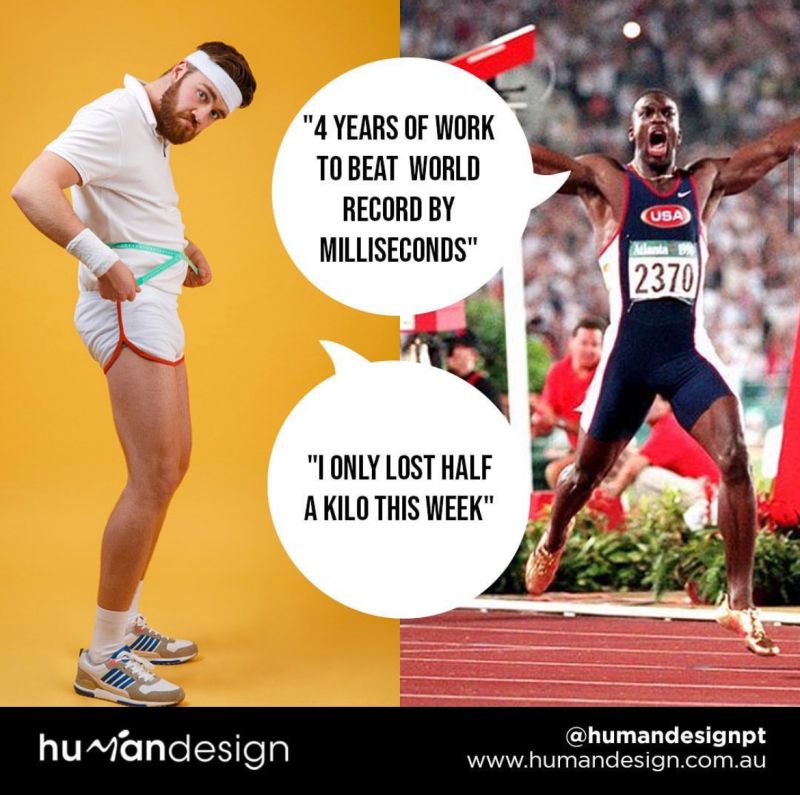 Managing expectations is key when approaching weight loss or changing your body shape. Many of you expect huge drops in weight every week because you’ve been conditioned by celebrity weight loss shows like the Biggest Loser. In reality, progress is a lot slower. Frustratingly so. But that’s how it is. Learn to celebrate any progress, no matter how small. Have you ever noticed how high performing athletes rejoice after shaving milliseconds off their personal best time? World records are beaten by hundredths of seconds or mere inches, and it can take years to achieve that. Don't get frustrated if you don't see immediate results, just trust the process. The worst thing you can do is give up because you think you "deserve" to lose more weight on a weekly basis or increase your strength by large numbers every workout. Here Are Four Ways I Can Help You Get Fit And Lose Weight And Actually Keep it Off.
1. Here is my youtube channel which has over 100 videos including 55 workouts and other educational videos. 2. I now offer ONLINE 1-1 Personal Coaching. Train with me from anywhere in the world at any time. I now offer fully bespoke 1-1 personal training via my TRUECOACH online platform. Check it out here 3. Check out my small group coaching sessions (max 4 people) Small Group Coaching. 4. 1-1 Personal Training at my Studio in North Sydney. My top level service. In-depth personalised training programs, nutrition coaching and weekly sessions at my boutique studio in North Sydney. Check out my Personal Training Options here:  How To: Progress Weights. One of my favourite fitness quotes is: "Your body cannot change unless you ask it to." You need to provide enough stimulus to make things change. Too many of you go to the gym and lift the same weights or run at the same speed every week. Here's a simple method to progress your weights each week to get stronger, fitter and more confident in the gym. 1. Every weights exercise has a target number of reps and sets like the one below: Dumbbell Biceps Curl: 3 Sets of 10-12 Reps. 2. The goal here is to achieve the higher end of the range with the selected weight. 3. You are ready to increase your weight when:
This could take a few workouts depending on the exercise. Do you have any questions about this? Tomorrow I will show you how to personally train yourself to ensure you are making safe, consistent progress in the gym or at home. Here Are Four Ways I Can Help You Get Fit And Lose Weight And Actually Keep it Off.
1. Here is my youtube channel which has over 100 videos including 55 workouts and other educational videos. 2. I now offer ONLINE 1-1 Personal Coaching. Train with me from anywhere in the world at any time. I now offer fully bespoke 1-1 personal training via my TRUECOACH online platform. Check it out here 3. Check out my small group coaching sessions (max 4 people) Small Group Coaching. 4. 1-1 Personal Training at my Studio in North Sydney. My top level service. In-depth personalised training programs, nutrition coaching and weekly sessions at my boutique studio in North Sydney. Check out my Personal Training Options here: |
AuthorJohn Donaghey Categories |

 RSS Feed